
Yacht Charters in Greece with Professional Skipper
For those without a valid bareboat sailing certificate, or for anyone who simply wants to relax and enjoy their holiday, our skippered yacht charters are the perfect choice.
As the name suggests, a skippered charter means that your yacht comes with a qualified professional skipper, who will take care of sailing, navigation, and mooring at each destination.
Our skippers are experienced, knowledgeable about the Greek islands, and friendly, ensuring that every aspect of your sailing holiday is smooth and stress-free. With a skipper on board, you can sit back, relax, and fully enjoy your unforgettable sailing experience in Greece.

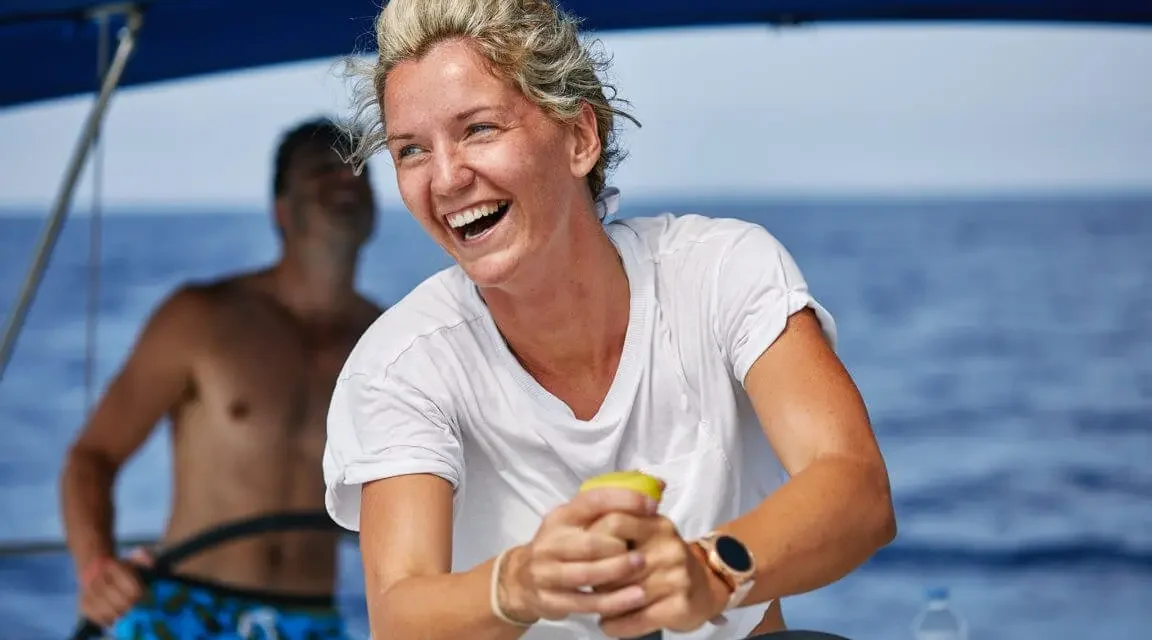
Customers involvment in skippered charters
On a skippered yacht charter, the skipper handles the sailing, navigation, and mooring, so you don’t need any prior experience or license. This allows you to relax, enjoy the scenery, and focus on your holiday.
However, if you want to learn or take part in sailing, most skippers are happy to teach basic sailing skills, let you handle the ropes, or even steer the yacht under their guidance. This way, you can tailor your level of involvement exactly to your preferences — from fully relaxed to hands-on sailing.
Our Bases in Greece
Fournaros Yachts offers bareboat yacht and catamaran charters from carefully selected bases across Greece, with a fleet designed to suit a wide range of sailing plans.
In Athens, we operate from Alimos and Salamina, ideal for the Saronic Gulf, as well as Lavrion, perfectly located for routes to the Cyclades. For Ionian sailing, known for calm waters and lush scenery, we offer departures from Lefkas, Preveza and Corfu. Kos is the ideal starting point for exploring the Dodecanese, while Volos provides convenient access to the Sporades for those travelling by road.

Frequently Asked Questions – Skippered Charters
WHICH ARE THE BEST DESTINATIONS FOR SAILING HOLIDAYS IN GREECE?
- Ionian Islands
The Ionian Islands offer some of the most relaxed sailing conditions in Greece, with a long season from April to October. The area is known for its sunny weather, mild temperatures, and generally gentle winds, making it an excellent choice for first-time sailors and families. During the summer, afternoon northwesterly breezes typically range from Force 2 to Force 5, providing comfortable and enjoyable sailing without demanding conditions. - Saronic Gulf
Close to Athens and ideal for shorter sailing itineraries, the Saronic Gulf combines easy access with diverse island experiences. Distances between ports are short, allowing for relaxed cruising even on limited time schedules. Winds are generally moderate, though the Meltemi can occasionally reach Force 5 to 6 during peak summer months. Thanks to its southern location, the area enjoys warm weather throughout the season, making it a popular choice for both beginners and experienced sailors. - Dodecanese Islands
Located in the southeastern part of Greece, the Dodecanese Islands enjoy the country’s warmest climate. Sailing conditions are generally pleasant, although occasional stronger winds can be expected, especially during the summer months. As the area lies at the edge of the Meltemi zone, winds are usually less intense than in the Cyclades, making the Dodecanese well suited for intermediate sailors or skippered charters seeking a balance between adventure and comfort. - Cyclades Islands
The Cyclades are Greece’s most iconic and dynamic sailing destination, offering dramatic landscapes and vibrant island life. During the summer, the region is influenced by the Meltemi, a northerly wind that can create challenging conditions, particularly from July to mid-August. With winds often reaching Force 5 to 7 and occasional stronger gusts, the Cyclades are best suited to experienced sailors or crews accompanied by a professional skipper. - Sporades Islands
The Sporades Islands are known for their lush landscapes and clear waters, offering a varied sailing experience throughout the season. In spring and autumn, steady winds of Force 3 to 5 create ideal conditions for less experienced sailors. During the summer, stronger winds may develop, increasing the level of challenge and making the area more suitable for confident sailors or skippered charters.
SHOULD I CHARTER A CATAMARAN OR A SAILING YACHT (MONOHULL)?
Catamarans are more stable due to the twin hull, which offers a comfy and stable deck. They are larger and quicker than monohulls. Sailing Yachts, on the other hand, look fantastic, are faster to respond and less costly than catamarans, and slice through water effortlessly. Both have advantages and disadvantages, so the decision is clearly up to you.
WHAT TYPE OF YACHT SHOULD I CHOOSE BASED ON THE NUMBER OF PEOPLE IN MY CREW?
Choosing the right yacht depends on both the number of guests and whether your charter is bareboat or skippered.
-
2–4 guests:
A small sailing yacht with 3 cabins is ideal for a bareboat charter.
If you choose a skippered charter, keep in mind that the skipper will usually need one cabin, reducing guest capacity. -
4–6 guests:
A 3-cabin sailing yacht works well for bareboat charters.
For skippered charters, a 4-cabin yacht is often recommended to ensure comfortable accommodation for everyone. -
6–8 guests:
A 4-cabin or 5-cabin sailing yacht or a small catamaran is suitable for bareboat charters.
With a skipper on board, choosing a 5-cabin yacht will provide better comfort and privacy. -
8–10 guests:
A catamaran is usually the best option, especially for skippered charters, as it offers more space and often dedicated crew accommodation. -
10+ guests:
A large catamaran or fully crewed yacht is recommended, offering separate cabins for crew and a more relaxed onboard experience.
Although yachts are certified for a maximum number of people, for a skippered charter it is important to allow one cabin for the skipper, or choose a yacht with a dedicated skipper cabin, to ensure a comfortable and enjoyable sailing holiday for everyone.
HOW MUCH DOES IT COST TO CHARTER A YACHT IN GREECE?
The cost of chartering a yacht in Greece can vary a lot, depending on a few basic factors such as the type of boat, the season, the size of the yacht, and whether you want a skipper or crew. To give you a general idea:
1. Type & Size of Yacht
-
Sailing yachts are usually the most affordable option.
-
Catamarans cost more, but offer extra space, comfort, and stability.
-
Motor yachts are the most expensive due to higher fuel consumption and luxury level.
As a rough starting point:
-
Small sailing yachts (2–3 cabins) can start from €1,500–€2,000 per week in low season.
-
Larger sailing yachts or catamarans usually range from €3,000 to €8,000+ per week, depending on size and season.
-
Luxury or motor yachts can go well beyond that.
2. Season
Prices change significantly throughout the year:
-
Low season (April, early May, October): lowest prices, great value for money.
-
Mid season (June, September): balanced weather and prices.
-
High season (July & August): highest demand and prices.
Chartering the same yacht in August can cost 30–50% more than in May or October.
3. Skipper & Crew
-
If you don’t have a sailing license or experience, you’ll need a skipper, which usually costs around €150–€200 per day.
-
Fully crewed yachts (with skipper, hostess, or full crew) increase the total cost but offer a hotel-like experience at sea.
4. Extra Costs (Important to Know)
The weekly charter price usually does not include:
-
Fuel
-
End cleaning
-
Marina fees
-
Food & drinks
-
Optional extras (SUP, Wi-Fi, hostess, etc.)
These extras typically add 20–30% to the base charter price.
WHAT IS THE COST COMPARING TO TYPICAL HOTEL HOLIDAYS?
A week on a yacht in Greece can cost:
-
Similar to a good hotel holiday if you choose a sailing yacht in low or mid season.
-
More luxurious and exclusive if you go for a catamaran or crewed yacht, but still shared among the group.
When split between friends or family, yacht chartering often turns out to be much more affordable than people expect, especially considering it includes accommodation, transport, and a unique travel experience all in one.
WHAT IS USUALLY INCLUDED IN THE YACHT CHARTER PRICE?
The charter price usually includes the use of the yacht for the agreed period, fully equipped and ready to sail, along with standard onboard equipment such as safety gear, kitchen utensils, and bed linen.
In most cases, the price also includes:
-
The yacht’s insurance
-
VAT
-
Dinghy and basic equipment
-
24/7 technical support during the charter
WHICH ARE THE STANDARD EXTRA COSTS?
In addition to the charter price, there are some standard extra costs to consider when planning your yacht holiday in Greece.
These usually include:
-
Fuel, based on consumption during your trip
-
Skipper and crew fees (if not included in the charter price)
-
End cleaning
-
Marina and port fees
-
Food and drinks for the crew (if applicable)
Optional extras may also apply, such as:
-
Hostess or additional crew
-
Water toys (SUP, sea scooter, etc.)
-
Wi-Fi, early check-in, or special equipment
These extra costs vary depending on the yacht, itinerary, and level of service, and are typically paid separately from the charter fee.
WHAT IS THE CHARTER DURATION AND WHAT ARE THE CHECK-IN & CHECK-OUT TIMES?
Yacht charters in Greece are typically offered on a weekly basis, with the standard charter running from Saturday to Saturday.
-
Check-in: Usually takes place on Saturday afternoon around 17:00, once the yacht has been prepared and fully checked.
-
Check-out: Typically on Friday evening the yacht must return to the base marina for the inspection process and final check-out is on Saturday morning until 09:00.
Shorter or longer charters may be available on request, depending on yacht availability and the season.
Exact check-in and check-out times are confirmed before departure and may vary slightly between marinas and yachts.
SHOULD I HIRE A SKIPPER OR NOT?
Hiring a skipper is recommended if you don’t have sailing experience or prefer a more relaxed holiday. A professional skipper will handle navigation, mooring, and safety, letting you fully enjoy the trip. If you have sailing experience and a valid sailing license, you can sail on your own without a skipper.
WHAT IS THE COST OF HIRING A PROFESSIONAL SKIPPER FOR A WEEK?
The cost for a professional skipper ranges between €190–€210 per day (approximately €1,330–€1,470 per week).
Kindly note that the skipper’s meals are to be covered by the guests. This can be arranged in a flexible and convenient way—either by including the skipper when meals are prepared onboard, inviting them to join you at restaurants, or by providing a daily allowance for their meals.
WHERE DOES THE SKIPPER SLEEPS AND WHAT DOES HE EAT DURING THE CHARTER?
On a skippered yacht charter, the skipper has a dedicated cabin or sleeping area on board, ensuring privacy for both guests and crew.
Regarding meals, guests are responsible for providing the skipper’s food and drinks throughout the charter. This can be arranged as part of your provisioning for the trip or purchased separately. Most skippers are happy to join guests at mealtimes, but it is standard practice that their meals are covered by the charter party.
WHAT IS THE ROLE OF THE SKIPPER?
On a skippered yacht charter, the skipper is responsible for sailing, navigating, and mooring the yacht, always following a clear protocol that prioritizes safety first — both for the guests and the vessel.
Once safety is ensured, the skipper manages the itinerary and schedule, making sure your journey runs smoothly. Finally, the skipper also contributes to guest enjoyment, offering guidance, local knowledge, and assistance with basic sailing if desired.
In short, their role is to keep you safe, on course, and relaxed, allowing you to enjoy an unforgettable sailing holiday in Greece.
WHAT TO BRING WITH ME?
When it comes to sailing charters, simplicity is key — pack only what you really need. On deck, casual and breezy clothing is perfect, while evenings ashore call for something a bit smarter, like slacks or a sundress.
For safety and comfort on board, rubber-soled shoes are recommended, so bring boat shoes or sneakers. A light windbreaker is useful for cooler or windy evenings, and depending on the season, a long-sleeved shirt or two can come in handy.
Sun protection is essential: pack plenty of sunscreen, wide-brimmed hats or sailing caps, and loose-fitting cotton cover-ups. Finally, use soft-shell luggage for easy storage on board.
ΗΟW DO I ARRANGE FOOD ON MY SAILING HOLIDAYS?
On sailing holidays, you have several convenient options. You can stock up at local supermarkets before or during your trip, making it easy to prepare meals on board. Most of our boats feature a fully equipped kitchen, allowing you to cook breakfast, lunch, or dinner while enjoying the sea. Alternatively, you can also dine ashore at local taverns, restaurants, or seaside cafes during stops, experiencing the local cuisine along your route. This flexible approach lets you combine self-catering with dining out for a varied and enjoyable culinary experience.
WHAT IS THE REFUNDABLE SECURITY DEPOSIT AND HOW DOES IT WORK?
The refundable security deposit is a safety guarantee held for the duration of your sailing holiday. It covers any accidental damage or extra cleaning costs. The deposit is fully refundable at the end of your trip, provided the boat is returned in the same condition as received. Payment is usually made before departure and returned shortly after check-out, once the boat has been inspected.